
Case Studies
In Practice
The problems worth solving in visual storytelling rarely have simple answers. They involve competing pressures, evolving tools, and audiences whose trust has to be earned every time. These case studies explore how we approach different challenges, what we've learned along the way, and how AI is expanding what's possible.

The Challenge
When the Ground Shifts Beneath You
Generative AI has created a real challenge for organizations that depend on trusted content. Newsrooms, universities, NGOs, and purpose-driven brands face a common problem: the tools for creating convincing synthetic media are advancing faster than the frameworks for managing them responsibly.
A single piece of content of questionable origin can undermine years of institutional credibility. A communications team that lacks the protocols to verify digital media exposes the entire organization to reputational damage. And educational institutions training the next generation of visual storytellers without addressing provenance and transparency are sending graduates unprepared into a shifting landscape.
Most organizations know they must adapt to a world changed by AI. What they lack is a practical framework to protect the audience trust they've spent years building. Whether adopting AI tools or not, the challenge is implementing the values-based standards and provenance tools required to safeguard the integrity of their own content.

Our Approach
Trust and Transparency as a Strategic Foundation
We start by understanding what's at stake. Every organization has earned a specific relationship of trust with its audiences, and that trust is sacrosanct. Before we discuss any tool or framework, we map what that trust is built on, what threatens it, and what would damage it beyond repair.
From there, we build the ethical foundation. What are the non-negotiable values? Where are the red lines? These aren't afterthoughts. They're the constraints that make every subsequent decision clearer.
Only then do we address workflow and tooling. We don't treat AI as a hammer in constant search of a nail. For some organizations, generative AI will open real creative territory. For others, it may not be the right fit. But even organizations that never touch AI tools now exist in a world where their audiences are surrounded by synthetic content. Sometimes the most urgent need isn't adopting AI. It's proving the authenticity of the content you're already making. That's where content provenance and bespoke transparency approaches come in.
Implementation is hands-on. We train teams, build internal practices, and help organizations articulate their commitments publicly, because transparency only works when it extends from the internal process all the way to the audience.

In the Field
Constant Adaptation in Visual Storytelling
Generative AI isn't the first disruptive technology in visual storytelling, nor will it be the last. For roughly two decades, Origen Story founder Matt Ford has led training and workshops helping teams, journalists, and emerging creatives incorporate new tools and approaches into their work responsibly.
He's contributed at World Press Photo's Stories of Change, NPPA's Multimedia Immersion, Penn State's Short Doc Workshop, Internews media development in Kazakhstan, and Northern Short Course (keynote). The topics have evolved from multimedia field journalism to immersive media production to AI-enhanced storytelling, but the core challenge has stayed the same: helping practitioners adapt without losing what makes their work trustworthy.
Most recently, he spoke at Nottingham Trent University, where faculty and students are grappling with how to develop content provenance practices and responsible approaches to AI in creative production.
The NTU engagement reinforced something that applies across every organization producing content in the current information ecosystem: the need for practical provenance frameworks. Audiences need ways to distinguish between content crafted with intention and content generated without transparency or editorial rigor.
Students, faculty, and working professionals all face the same gap between knowing that transparency matters and having concrete tools to implement it. The framework we're developing addresses this at three levels:
- Creator workflows: how to track and document provenance throughout production
- Institutional policy: what standards to adopt and how to communicate them publicly
- Audience-facing transparency: how to present content credentials in ways audiences can actually understand and verify
As C2PA adoption grows and AI labeling legislation approaches in the EU and beyond, organizations that build these frameworks now will be ahead of compliance requirements rather than scrambling to catch up.
“As someone who comes from a journalism background and now trades in the business of trust as an educator, Matt’s perspective and values give his work real weight. He brings rare practitioner depth to AI and content provenance, actively building workflows and solving implementation problems that most people are still only talking about. He makes complex, technical territory genuinely accessible, communicating with clarity and a grounded optimism that helps people engage with these challenges confidently. His focus on trust, transparency, and content provenance comes from decades of work where credibility was the foundation of everything.”
— Jonathan Worth, Head of Photography, Nottingham Trent University
Are you navigating similar challenges? Let's talk about what this could look like for your organization.
Get in TouchThe Challenge
Stories That Resist Being Told
Some of the world's most important stories are also the most challenging to document and communicate clearly. Even in a camera-abundant world, countless stories lack documentary evidence of events. In conflict zones and humanitarian crises, the best witnesses are often the most vulnerable people to put on camera.
These are storytelling problems that documentary filmmakers and animators have always faced. The tools change, but the core tension remains: how do you make the invisible visible, protect the vulnerable, counter reductive imagery, and bring clarity to complexity, all while maintaining the trust of an audience that needs to know what they are watching is honest?
Past Work
Finding Visual Solutions Within Constraints
Identity protection through animation: When documenting the experiences of people in conflict, we often employed narrated animation to portray personal journeys that lacked shareable visual documentation. Animation provided a way to tell these stories while protecting the identities of the people at the center of them.
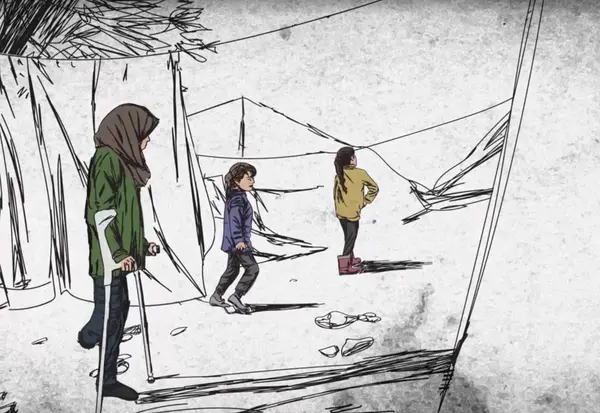

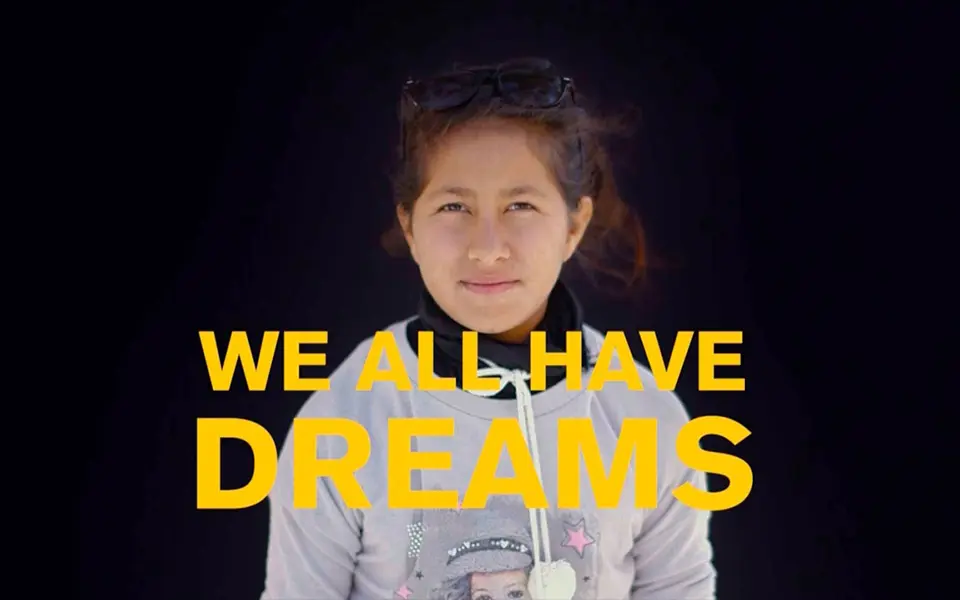
Countering visual tropes: In cases where subjects were in temporarily safe situations and confident about appearing on camera, we faced a different challenge: how to feature them without reducing their experience to the doe-eyed victim in a refugee camp that has become a trope of donor campaigns. Instead of reinforcing that imagery, we stripped away the temporary artifice of their physical situation and let them share their personal hopes and dreams on their own terms.

Documentary short
UNICEF Home
Shifting the focus from IDP camp living conditions to the humanity of universal personal relationships.
Documentary Short
IRC Dreams
Stripping away the visual tropes of refugee camps to let displaced people share their hopes and aspirations on their own terms.
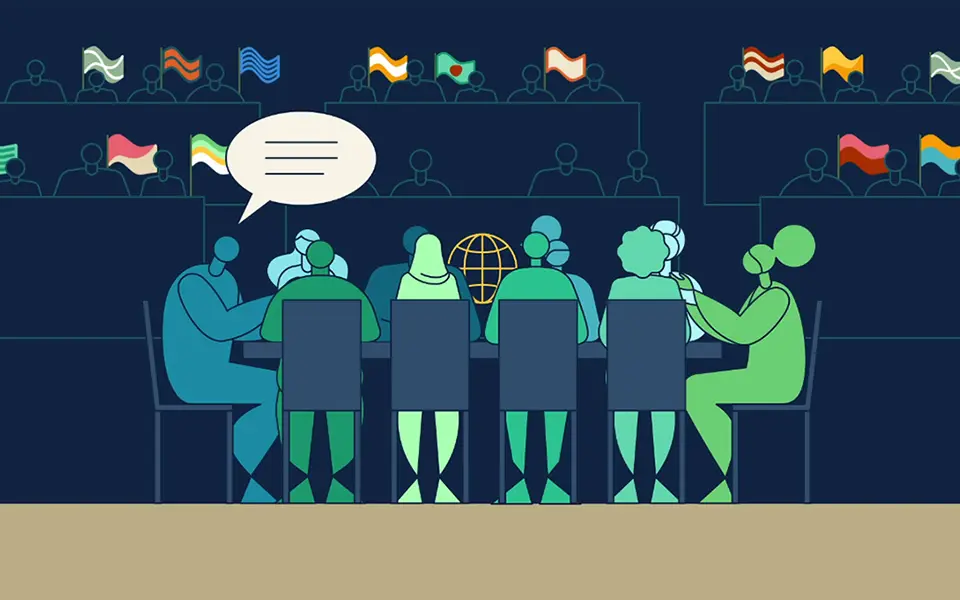
Making complex ideas accessible: Animation is also an effective tool for portraying complex processes, systems, and abstract concepts that resist photographic documentation. For the Institute for Integrated Transitions, we used animation to break down dense peacebuilding frameworks into clear, accessible visual narratives that practitioners could engage with directly.
Animated Explainer
Fast-Track Negotiation
Breaking down dense peacebuilding frameworks into clear, accessible visual narratives for the Institute for Integrated Transitions.
“Origen Story has an extraordinary ability to convert complex concepts into compelling visuals and stories that anyone can grasp. The work they did on our fast-track negotiation model allowed us to reach much broader audiences than would otherwise have been possible.”
— Mark Freeman, Executive Director, Institute for Integrated Transitions
AI Evolution
New Tools for Enduring Problems
Animation has long been a go-to solution for bringing testimony to life and explaining abstract concepts, but budget constraints often limited the visual aesthetic to simple 2D and sketch styles with basic shape animations. Incorporating AI video generation into animation pipelines changes what's achievable. Teams can quickly iterate and align stakeholders around a consistent visual direction from the start. Visual styles that were previously impossible at existing budgets become viable. And it opens up creative approaches to abstract concepts that were previously out of reach.

Demo Project
Caga Tió
A whimsical exploration of the beloved Catalan holiday tradition that showcases the expanding potential of AI-enhanced animation.

Series
Wouldn't It Be Cool?
A humorous take on the greenhouse gas bathtub analogy, making climate science approachable through AI-generated animation.
Hybrid workflows for identity protection and historical recreation: As AI tooling integrates into more creative software, most projects now exist on a spectrum of syntheticity where some content is camera-captured and other material is generated. AI face-replacement technology can protect interview subjects while preserving the emotional microexpressions that help audiences connect with them. AI-generated historical recreations can transparently bring archival material to life in ways that were previously impossible.
Content provenance across the production chain: Wherever possible, we use cameras, software, and generators that incorporate C2PA metadata at the point of creation, then design workflows to maintain that provenance chain through editing all the way to publishing. As this space evolves, we are developing new ways to communicate the authenticity of content in clear and accessible ways for audiences.

Do you have a challenging story you're trying to tell? Let's explore what's possible.
Get in TouchThe Challenge
Complex Stories Deserve Complex Forms
Some stories are too large, too interconnected, or too multifaceted to fit into a single linear narrative. Global systems, cultural histories, investigative data, and interconnected crises all resist the simplicity of a single thread.
Linear storytelling can force topics and themes into artificial simplicity. The storyteller picks one thread and follows it, leaving the audience with a coherent but incomplete picture. Important context gets cut. Connections between systems go unexplored. The audience receives a story, but not the understanding that would let them engage with the issue on their own terms.
Non-linear and interactive storytelling offers a different model. Instead of choosing the path for the audience, you build the territory and let them explore it. The story still has structure, editorial judgment, and narrative craft. But the audience has agency. They choose what to explore, how deep to go, and which connections matter to them.
Past Work
Giving Audiences Agency
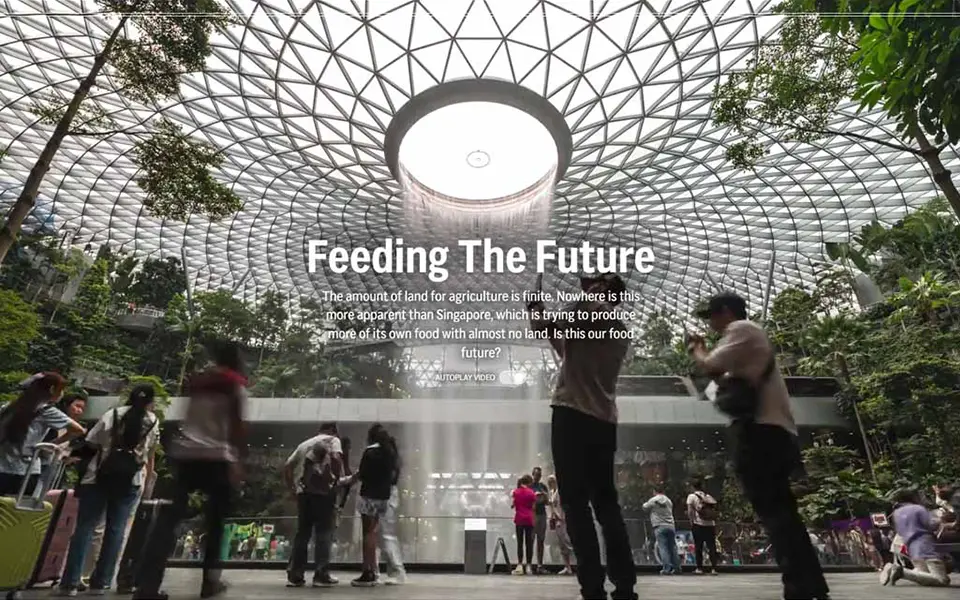
The Protein Problem: A team of roughly 50 journalists spent months investigating stories from around the globe. The challenge was how to bring all those deeply reported stories, each from different cultures with different themes and priorities, under the umbrella of one larger narrative that was complete yet nuanced and diverse. We leaned into user-driven narrative selection, using photo essays, video vignettes, data visualizations, and other material as branching deep dives from the main narrative threads. The project could be concise and skimmable while offering deeper immersive experiences for audiences who wanted to go further.
Non-linear investigation
The Protein Problem
A non-linear visual storytelling experience exploring the complexities of global protein consumption and sustainability.
2024 James Beard Media Award for Innovative Visual Storytelling | SEJ 1st Place Outstanding Explanatory Reporting
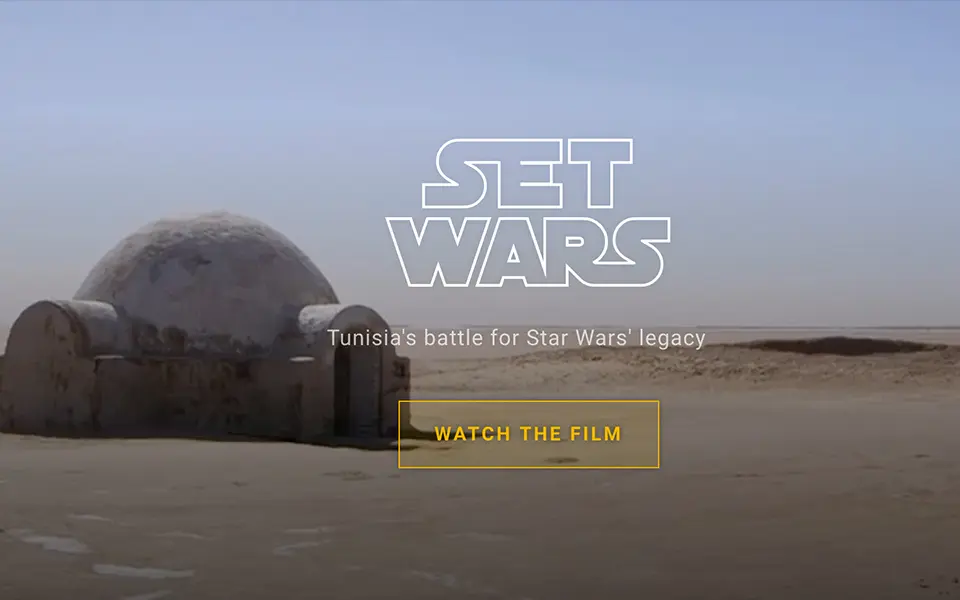
Explore the project →Star Wars Tunisia: The remaining Star Wars sets in Tunisia attract fans of the films, but the real story is more complex than a location guide. The characteristics of the fictional world drew heavily from local Tunisian cultural traditions, and the connections between film, place, and community formed more of a web than a linear thread. A non-linear approach let audiences move between the locations and their ties to the movies, the communities that live alongside these sites, and the cultural influences that flowed in both directions, choosing their own path through interconnected stories that would have been flattened by a traditional documentary structure.
Interactive Documentary
Star Wars Tunisia
A non-linear journey through the real Tunisian locations, communities, and cultural traditions that shaped the world of Tatooine.
2016 Webby Award for Best Use of Interactive Video
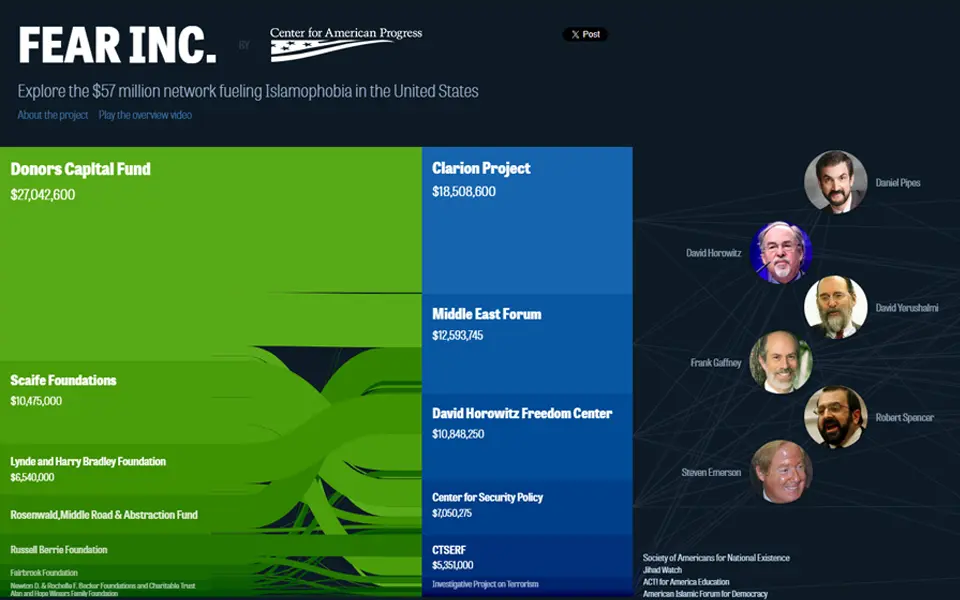
Explore the project →The Islamophobia Network: The challenge here was making the opaque visible. The project mapped a vast, well-funded network of media personalities and policy advocates whose financial backing permeated multiple information ecosystems. Traditional reporting could describe these connections, but only an interactive data visualization could make them instantly explorable and understandable. Paired with video storytelling and explanatory writing, the interactive format let audiences trace funding sources, organizational relationships, and media influence on their own terms.
Interactive Data Visualization
The Islamophobia Network
An explorable map of the organizations, funding sources, and media influence behind a vast network of anti-Muslim advocacy in America.
Explore the project →AI Evolution
When the Barrier to Entry Drops
AI-assisted development enables early-stage prototyping of non-linear storytelling experiences, creating real feedback loops between creators, stakeholders, and audiences before the financial commitment to a full development cycle. This lowers the barrier for more stories to be approached in the interactive formats best suited to telling them.
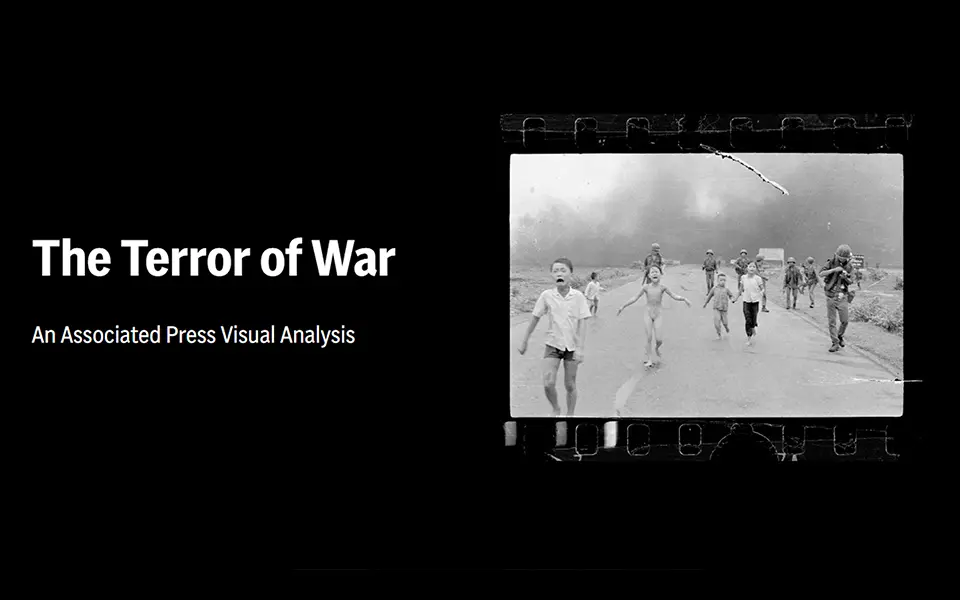
The Terror of War: When the AP needed to present the visual evidence of their year-long investigation into questions surrounding the provenance of the famed Terror of War photograph, they faced a near-impossible deadline. There would be only one week between final reviewed content and public launch. To meet that timeline, we used AI-assisted development tools to build a component-based architecture that allowed for swift, flexible implementation once the final content was ready.
Interactive Investigation
The Terror of War
AI-assisted development enabled rapid deployment of a component-based interactive presenting visual evidence from the AP's year-long provenance investigation.
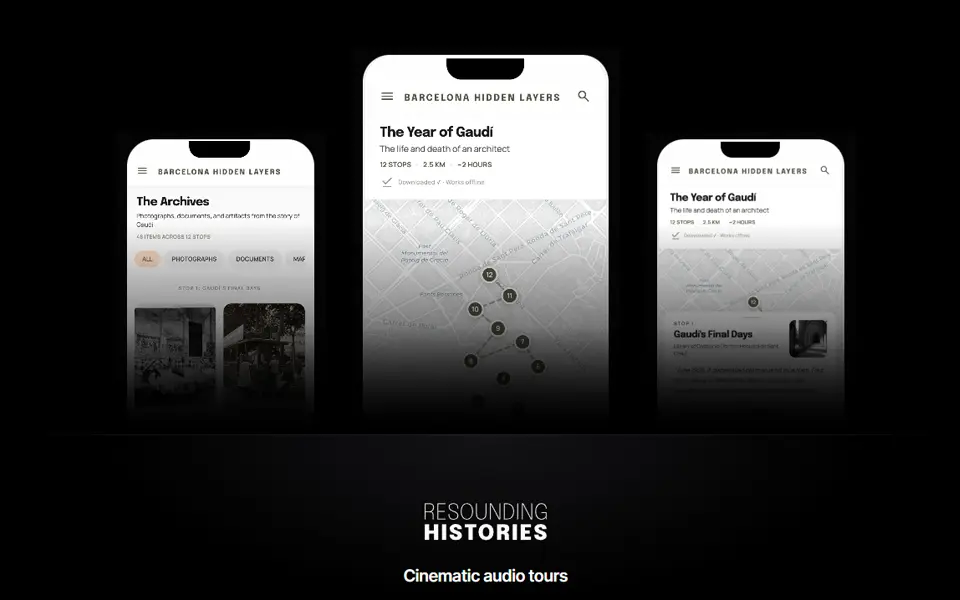
View the project →Resounding Histories: The Year of Gaudí: 2026 marks the 100th anniversary of the death of Antoni Gaudí and the year the main structure of the Sagrada Familia, under construction for 144 years, is set to be completed. To mark the occasion, Origen Story is producing Resounding Histories, a narrative self-guided tour of Gaudí's life in Barcelona based on extensive research and archival material. The AI-enhanced immersive audio experience brings audiences as close as possible to standing in his footsteps a century ago.
Immersive Audio Experience
Resounding Histories: The Year of Gaudí
A narrative self-guided tour of Gaudí's life in Barcelona, using AI-enhanced storytelling to bring a century of history to life through immersive audio.
Learn more →“Matt has a rare ability to take extensive archival research and transform it into something that forms an emotional connection with audiences. With the 100-year anniversary of Gaudí’s death, he turned a vast collection of historical material into an immersive narrative that feels personal and immediate. He brings real editorial judgment to every creative decision, knowing what to include, what to leave out, and how to let the audience find their own path through a complex story.”
— Emily Ferguson, Co-founder and CPO, Resounding Histories
Do you have a story too complex for a single narrative? Let's explore the possibilities.
Get in Touch